
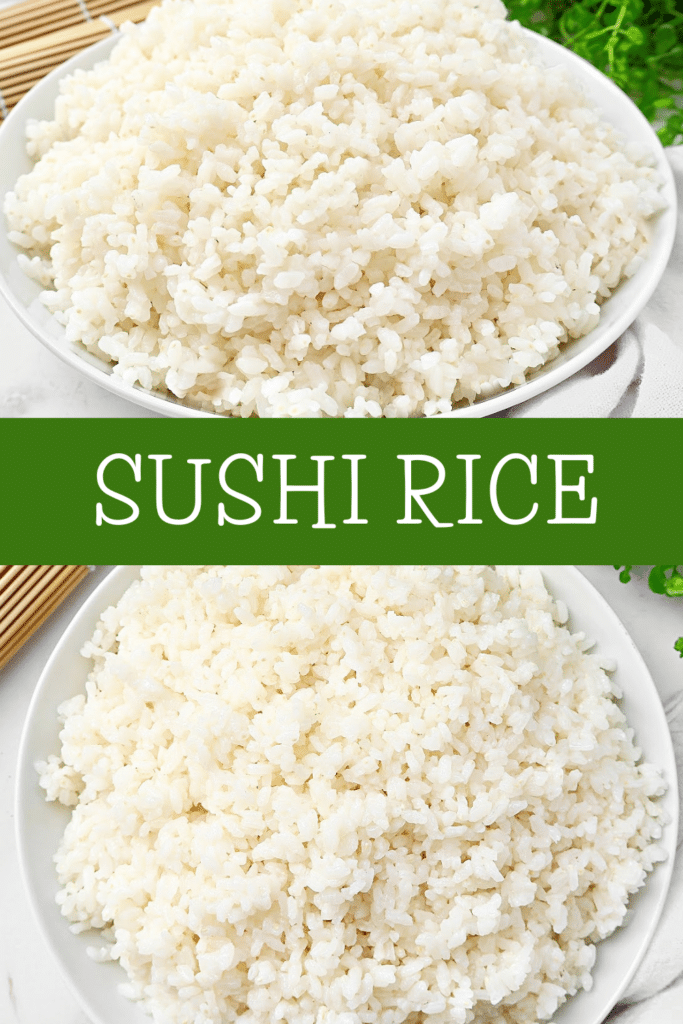
Sushi Rice is short-grain Japanese sticky rice cooked on the stovetop and seasoned with rice vinegar, sugar, and salt. Use it for Mushroom Sushi Rolls, poke bowls, temaki hand rolls, or sushi burritos. Yields 4 sushi rolls.
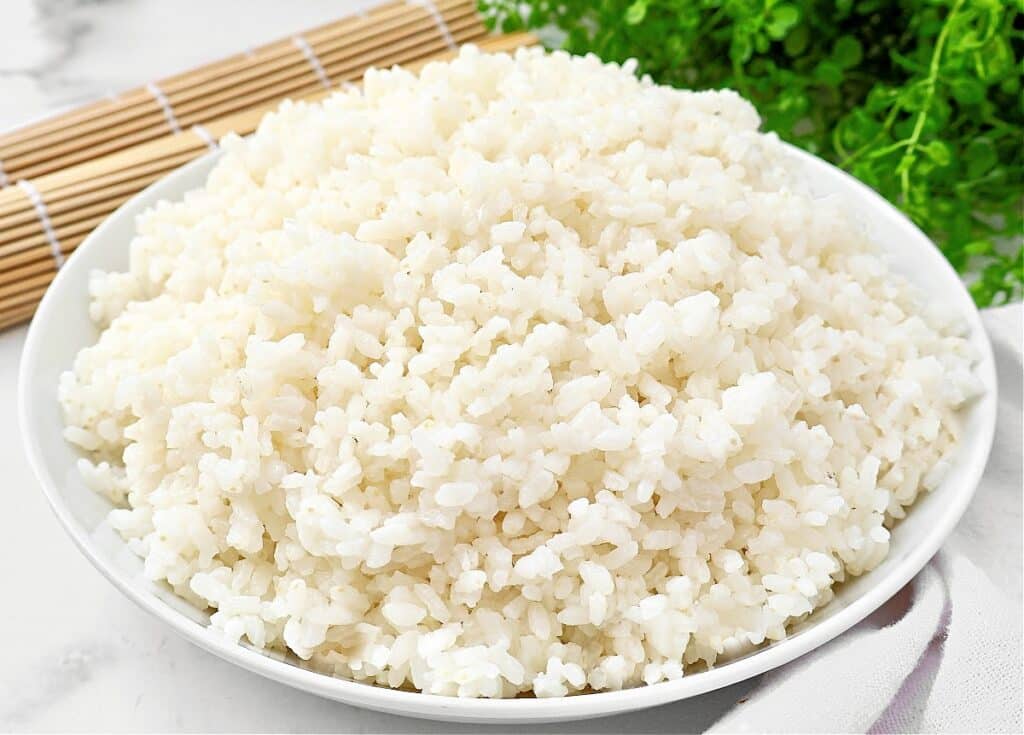
Easy Sushi Rice Recipe
I like this recipe because it’s so much simpler than people expect. Once you’ve done it, you’ll have it down and won’t hesitate to make sushi at home.
What makes sushi rice special is that little seasoning mixture of rice vinegar, sugar, and salt that gets folded in at the end. It’s such a small thing, but it’s what takes plain cooked rice to something that tastes like it came from your favorite sushi spot.
This rice has the unique texture that you know from your favorite sushi spot, too. You want the grains to be tender and sticky, so everything holds together nicely when you roll it.
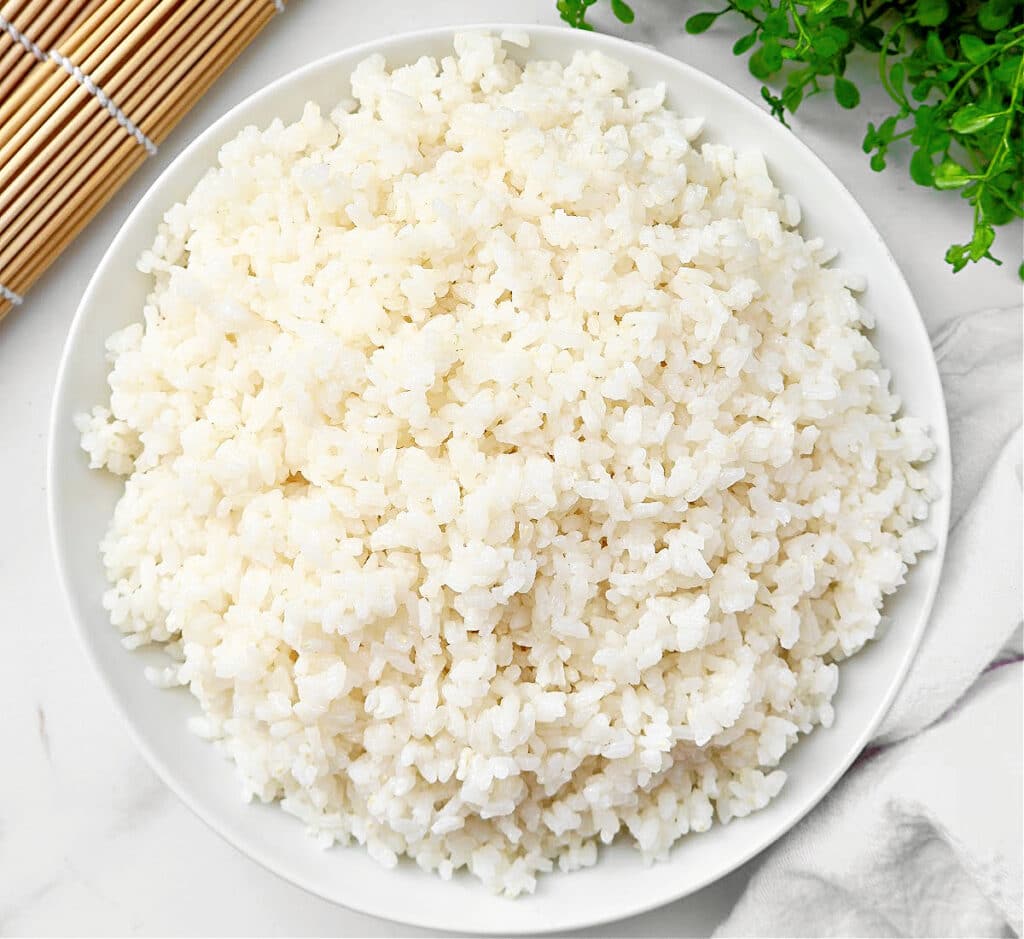
Ingredients for Sushi Rice
Here’s what you’ll need. Exact amounts are in the recipe card below.
- Short-Grain Japanese Rice – This is the only rice that works for sushi. It’s labeled “sushi rice” at most grocery stores. The high starch content is what gives it the sticky, slightly firm texture that holds together when rolled or shaped. Medium-grain and long-grain rice won’t give you the same result.
- Cold Water – Starting with cold water matters. It allows the grains to absorb water gradually as it heats, which produces a more even, fluffy texture. Hot water cooks the outside of the grain before the inside is ready.
- Unseasoned Rice Vinegar – Use unseasoned, not seasoned. Seasoned rice vinegar already contains sugar and salt, which makes it harder to control the flavor balance of the finished rice. Unseasoned gives you full control.
- Sugar – Part of the seasoning mixture. It balances the acidity of the vinegar.
- Kosher Salt – Rounds out the seasoning. A small amount makes a noticeable difference.
How to Make Sushi Rice
STEP ONE: Rinse the Rice. Place the rice in a fine mesh strainer or colander and rinse it under cold running water, stirring gently with your fingers or a spoon. Continue rinsing until the water runs clear, indicating that most of the starch has been removed. (Rinsing helps remove excess starch from the surface of the rice grains, which can result in a cleaner, fluffier texture once cooked. Some sushi rice brands are pre-rinsed or partially rinsed, so check the package for instructions.)
STEP TWO: Prepare the Rice. In a large saucepan, bring the water to a boil. Stir in the rinsed rice, then reduce the heat to low. Cover the saucepan and simmer for 20 minutes, or until the rice is cooked and the water is absorbed. Remove from the heat and let the rice steam, covered, for 10 minutes to firm up and absorb any excess moisture.
STEP THREE: Season the Rice. While the rice cooks, whisk the rice vinegar, sugar, and salt together in a small bowl until the sugar and salt are fully dissolved.
STEP FOUR: Incorporate the Vinegar Mixture. After the resting period, gently fold the vinegar mixture into the cooked rice until evenly distributed. Be careful not to mash the rice; you want to maintain its fluffy texture.
STEP FIVE: Cool the Rice. Transfer the seasoned rice to a baking sheet and spread it out evenly using a rice paddle or spatula. Let the rice cool to room temperature, about 30 minutes. As it cools, it will develop a slightly sticky texture, perfect for rolling sushi.
Frequently Asked Questions
For the quickest cooling, yes. It’s the most effective method because the thin layer allows the rice to cool evenly and quickly while excess moisture evaporates. A large bowl works too, but takes longer. A wooden or non-metallic bowl is traditional since metal can react with the vinegar and affect the flavor.
The cloudy water is surface starch. If you skip rinsing or stop too early, that starch makes the cooked rice overly sticky and gummy rather than the distinct-grain, sticky texture you want for sushi.
Yes. Cook according to your rice cooker’s instructions for white rice, then follow the same seasoning and cooling steps.
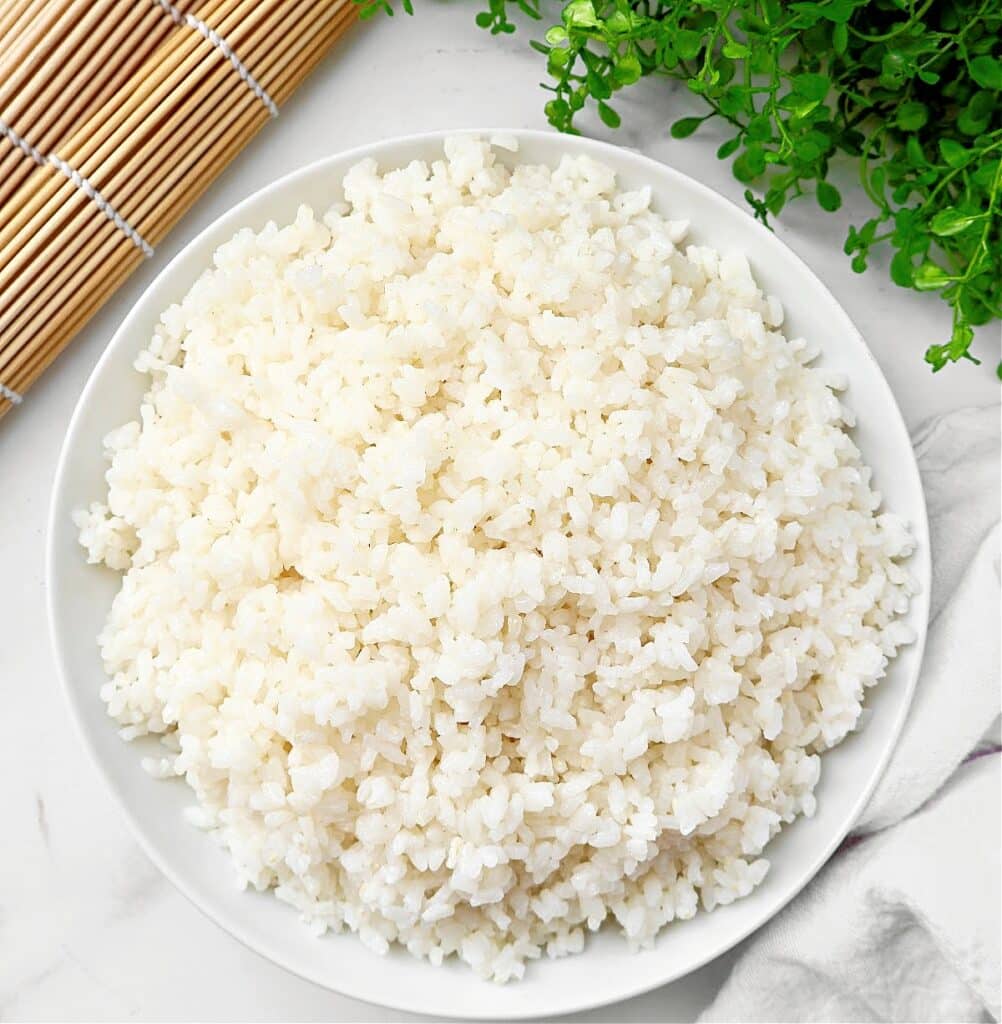
Tips for Success
- Use a Wooden Spoon or Silicone Spatula: When mixing the vinegar mixture into the rice, use a wooden spoon or silicone spatula to fold gently. Avoid using metal utensils, as they can react with the vinegar and affect the taste of the rice.
- Don’t Overmix: When incorporating the vinegar mixture into the rice, use a gentle folding motion to avoid mashing the grains. Overmixing can result in mushy rice, which won’t hold up well in your sushi rolls.
- Cool Completely: Ensure the rice cools to room temperature before using it for sushi. Hot or warm rice will steam the nori (seaweed sheets), making it soggy and compromising the texture of your rolls.
- Use Immediately: Freshly made sushi rice is at its peak flavor and texture. For best results, use the sushi rice immediately after it has cooled.
- Cover the Rice: Use a damp towel to cover the sushi rice while you’re working on other components, such as prepping veggies, for your sushi rolls. This small extra step prevents the rice from drying out before you’re ready to assemble your sushi rolls.
Sushi Filling Ideas
There are endless possibilities for building your favorite sushi roll with vegan and vegetarian sushi fillings. Here are some of my favorites:
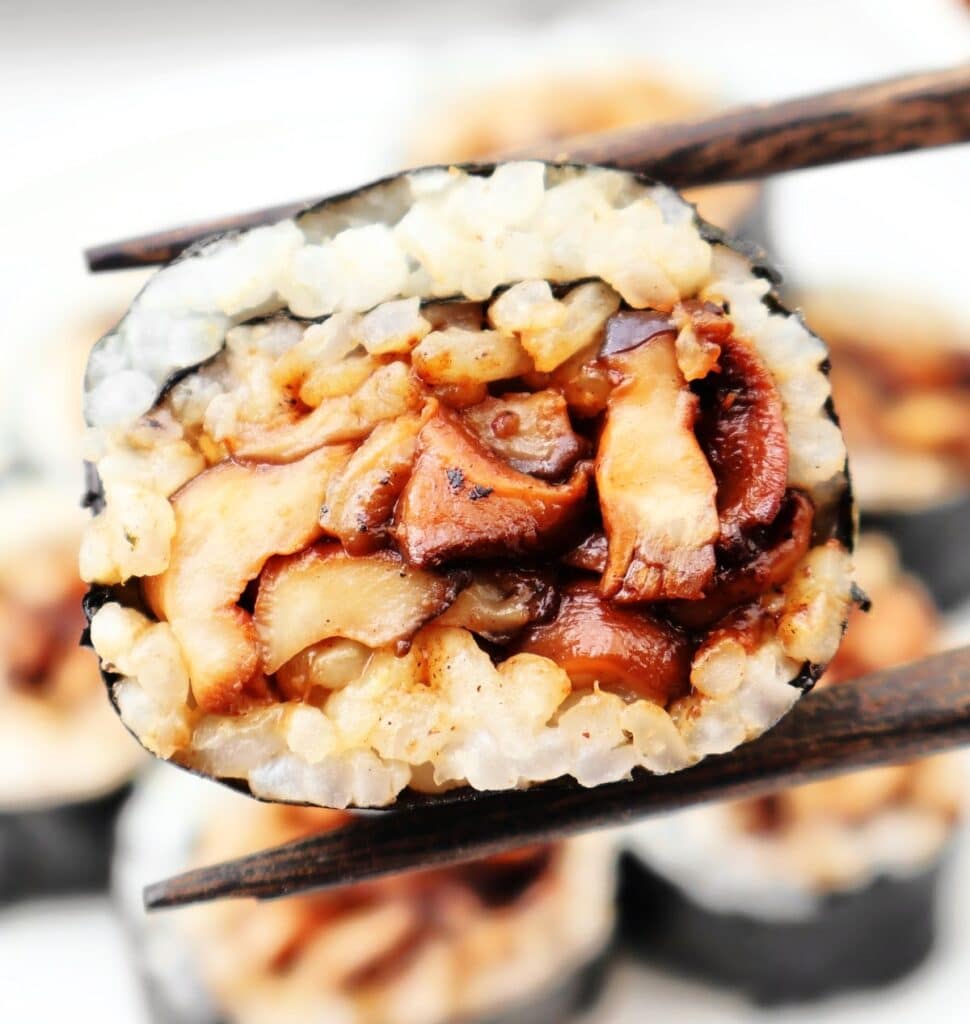
- Shiitake Mushrooms: Sliced and sautéed shiitake mushrooms have a rich, umami flavor and a “raw fish” meaty texture that’s perfect for sushi rolls. (Shiitake Mushroom Sushi, pictured below)
- Tempura Vegetables: Lightly battered and fried vegetables, such as sweet potato, zucchini, or bell pepper, add a crispy contrast to the soft sushi rice.
- Spinach: Steamed or blanched spinach leaves provide a tender, nutritious filling with a subtle, earthy flavor.
- Pickled Radish: Tangy pickled radish slices add a burst of flavor and a satisfying crunch.
- Mango: The sweet and tangy flavor of mango slices adds a tropical twist.
- Kampyo (Dried Gourd Strips): Rehydrated kampyo strips have a chewy texture and a slightly sweet taste. Look for them at Japanese grocery stores or your local Asian market.
- Asparagus: Blanched asparagus spears offer texture and a subtle earthy flavor.
Storage
- To store sushi rice, first let the cooked rice cool to room temperature. Then transfer the rice to an airtight container, ensuring the container is clean and dry beforehand. Store in a cool, dark place, such as a pantry or kitchen cabinet, away from heat and direct light sources.
- Leftover cooked rice can be refrigerated for up to two days, but is best repurposed in a fried rice recipe rather than used for sushi.
- For the best quality, use the rice within 24 hours; prolonged storage can affect its texture and flavor.
More Rice Recipes
Tried this recipe? Leave a Star Rating and share your thoughts in the comments below. Thanks for being part of our home cooking community!
Follow This Wife Cooks on Instagram | Facebook | Pinterest | YouTube
Sushi Rice Recipe
Ingredients
- 2 2/3 cups water
- 1 1/3 cups short-grain rice
- 2 tablespoons unseasoned rice vinegar
- 1 tablespoon granulated sugar
- 1/2 teaspoon kosher salt
Instructions
- Place the rice in a fine mesh strainer or colander and rinse it under cold running water, stirring gently with your fingers or a spoon. Continue rinsing until the water runs clear, indicating that most of the starch has been removed. (Rinsing helps remove excess starch from the surface of the rice grains, which can result in a cleaner, fluffier texture once cooked. Some sushi rice brands are pre-rinsed or partially rinsed, so check the package for instructions.)
- In a large saucepan, bring the water to a boil. Stir in the rinsed rice, then reduce the heat to low. Cover the saucepan and simmer for 20 minutes, or until the rice is cooked and the water is absorbed. Remove from the heat and let the rice steam, covered, for 10 minutes to firm up and absorb any excess moisture.
- While the rice cooks, in a small bowl, whisk together the rice vinegar, sugar, and salt until the sugar and salt are fully dissolved.
- After the resting period, gently fold the vinegar mixture into the cooked rice until evenly distributed. Be careful not to mash the rice; you want to maintain its fluffy texture.
- Transfer the seasoned rice to a baking sheet and spread it out evenly using a rice paddle or spatula. Let the rice cool to room temperature, about 30 minutes. As it cools, the rice will develop a slightly sticky texture, perfect for rolling sushi. The rice is now ready for your favorite sushi!
Nutrition
This post was updated April 20, 2026.



Leave a Reply